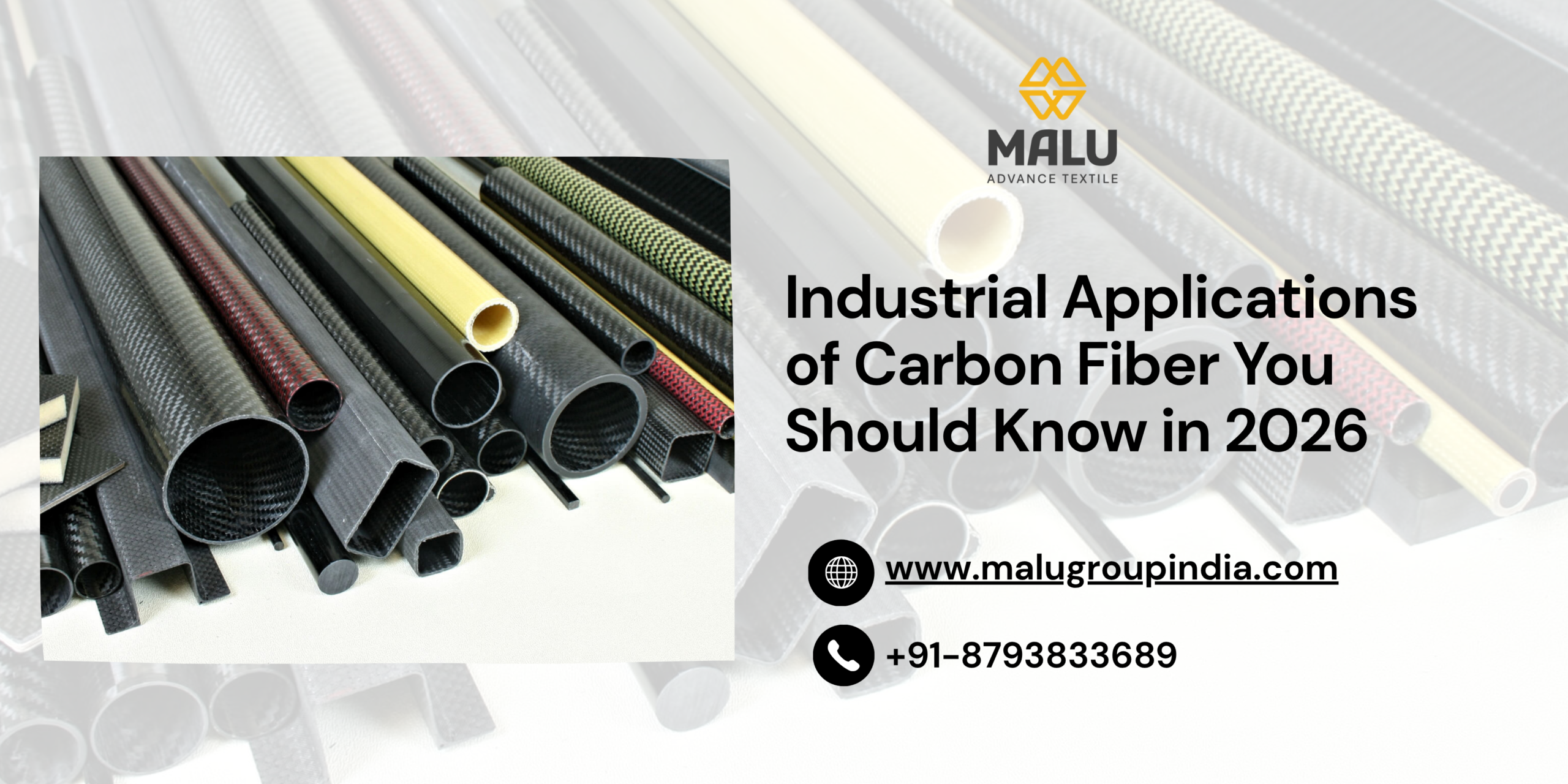
In recent years, carbon fiber has moved far beyond luxury sports cars and aerospace engineering. Today, industries around the world are using this advanced material to improve performance, reduce weight, and increase durability. As technology continues to evolve, the industrial applications of carbon fiber are expanding faster than ever in 2026.
From automotive manufacturing to renewable energy, companies are searching for stronger and lighter materials that can improve efficiency without compromising reliability. This is where it stands out.
At Malu Group India, a trusted manufacturer of carbon fiber fabric and composite materials, we have seen how industries are shifting toward high-performance solutions to meet modern demands.
What Makes Carbon Fiber So Valuable?
Before understanding the industrial applications of carbon fiber, it is important to know why industries prefer it over traditional materials like steel or aluminum.
It is known for:
- High strength-to-weight ratio
- Excellent durability
- Corrosion resistance
- Thermal stability
- Low maintenance requirements
These qualities make it suitable for environments where performance and long-term reliability matter the most.
1. Automotive Industry Applications of Carbon Fiber
One of the biggest industrial applications of carbon fiber is in the automotive sector. Manufacturers are constantly trying to reduce vehicle weight to improve fuel efficiency and performance.
It is commonly used in the following:
- Vehicle body panels
- Roof structures
- Racing car components
- Interior parts
- Electric vehicle frameworks
In electric vehicles especially, lighter materials help improve battery efficiency and driving range. Many automotive companies are now replacing metal parts with carbon fiber composites to achieve better speed, safety, and energy efficiency.
2. Aerospace and Aviation
The aerospace industry has relied on carbon fiber for years, but its use is growing rapidly in 2026. Aircraft manufacturers need materials that are lightweight yet capable of handling extreme conditions.
Some common industrial applications of carbon fiber in aerospace include the following:
- Aircraft wings
- Cabin interiors
- Structural reinforcement
- Drone manufacturing
- Helicopter components
Because it reduces overall aircraft weight, airlines can lower fuel consumption and operating costs while improving performance.
3. Renewable Energy Sector
As renewable energy projects increase globally, the demand for advanced materials is also rising. One of the lesser-known industrial applications of carbon fiber is in wind energy systems.
It is widely used in the following:
- Wind turbine blades
- Structural supports
- High-performance energy components
Longer and lighter turbine blades help generate more electricity while reducing stress on the overall system. This improves efficiency and increases the lifespan of renewable energy equipment.
4. Construction and Infrastructure Applications of Carbon Fiber
Modern construction projects are becoming more focused on durability and sustainability. Carbon fiber materials are now being used to strengthen buildings, bridges, and industrial structures.
Popular industrial applications of carbon fiber in construction include the following:
- Structural reinforcement
- Bridge repair systems
- Earthquake-resistant designs
- Concrete strengthening
Compared to traditional reinforcement materials, it is easier to install and offers long-term resistance against corrosion and environmental damage.
5. Defense and Security Equipment
Defense manufacturing requires materials that are strong, lightweight, and reliable under extreme conditions. This has made carbon fiber an essential part of modern military equipment.
Some key industrial applications of carbon fiber in defense include:
- Protective equipment
- Tactical vehicle components
- Aerospace defense systems
- Military drones
Its lightweight nature allows better mobility while maintaining structural strength and durability.
6. Industrial Machinery and Robotics Applications of Carbon Fiber
Factories and manufacturing plants are increasingly adopting automation and robotics. It helps improve the efficiency of robotic systems by reducing the weight of moving components.
In industrial machinery, carbon fiber is used for:
- Robotic arms
- Machine frames
- Precision tools
- High-speed equipment components
This is one of the fastest-growing industrial applications of carbon fiber because lighter machinery parts can operate faster and consume less energy.
Why Industries Are Choosing Carbon Fiber in 2026
The growing demand for smarter manufacturing solutions is driving the expansion of the industrial applications of carbon fiber across multiple sectors.
Industries today are looking for materials that can:
- Improve efficiency
- Reduce operational costs
- Increase product lifespan
- Support sustainable manufacturing
- Enhance overall performance
It’s successfully meets all these requirements, making it one of the most important industrial materials of the future.
Final Thoughts
The future of advanced manufacturing is heavily connected to the growth of the industrial applications of carbon fiber. As industries continue to prioritize performance, lightweight engineering, and durability, carbon fiber will play an even bigger role in shaping modern technology.
Whether it is automotive, aerospace, renewable energy, construction, or robotics, the demand for reliable carbon fiber solutions is only expected to increase in the coming years.
As a trusted manufacturer of carbon fiber fabric and composite materials, Malu Group India remains committed to delivering high-quality solutions that support evolving industrial needs across India and beyond.