Modern defense equipment is expected to be stronger, lighter, faster, and more durable than ever before. From military vehicles to protective gear and aerospace systems, material selection plays a major role in overall performance. This is where carbon fiber in defense industry applications has become increasingly important.
Today, defense manufacturers across the world are moving toward advanced composite materials because traditional metals alone are no longer enough to meet modern operational demands. At Malu Group India, we manufacture high-quality carbon fiber fabrics designed for industries that demand precision, strength, and reliability.
Why Carbon Fiber Is Important in Defense
Defense operations often involve extreme conditions, high-impact environments, and the need for lightweight mobility. One of the biggest advantages of using carbon fiber in defense industry applications is its exceptional strength-to-weight ratio.
Carbon fiber materials are significantly lighter than steel while still offering impressive structural strength. This helps reduce the total weight of military equipment without compromising durability or safety.
For example, lighter armored vehicles consume less fuel and can move faster in challenging terrains. Similarly, lightweight drone components improve flight efficiency and endurance.
High Strength with Reduced Weight carbon fiber
Weight reduction is a major challenge in defense manufacturing. Heavy equipment can limit speed, transportation efficiency, and fuel economy. This is why carbon fiber in defense industry solutions is gaining popularity in:
- Military vehicles
- Aircraft interiors and structures
- UAVs and drones
- Naval equipment
- Protective defense systems
Carbon fiber composites help manufacturers design equipment that is easier to transport and more operationally efficient.
Compared to conventional materials, carbon fiber offers excellent mechanical performance while reducing unnecessary load. This combination is especially useful in tactical and aerospace defense applications.
Excellent Resistance to Corrosion
Defense equipment is regularly exposed to harsh environmental conditions such as moisture, chemicals, saltwater, and extreme temperatures. Metals often corrode over time, increasing maintenance costs and reducing equipment life.
One of the biggest benefits of carbon fiber in defense industry applications is corrosion resistance. Carbon fiber materials maintain their performance even in difficult environments, making them suitable for naval systems, outdoor defense structures, and military transport equipment.
This long-term durability helps reduce repair frequency and improves operational reliability.
Better Performance in Aerospace and UAV Applications of carbon fiber
Modern defense systems rely heavily on drones, surveillance aircraft, and aerospace technology. In these applications, every kilogram matters.
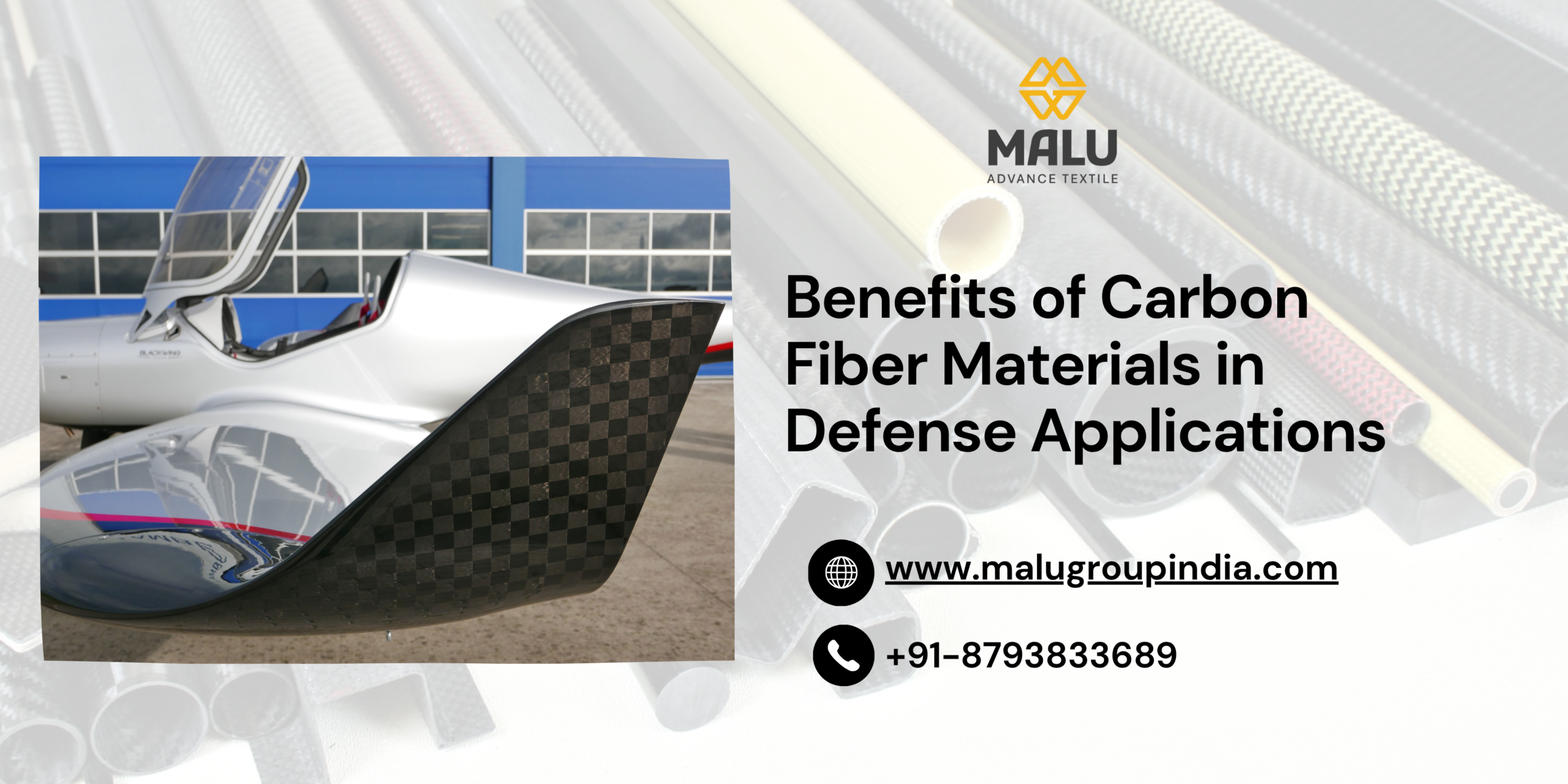
The use of carbon fiber in defense industry manufacturing allows aerospace engineers to create lightweight structures that improve fuel efficiency, increase flight range, and enhance maneuverability.
These fabrics are commonly used in the following:
- Drone frames
- Aircraft structural components
- Radar systems
- Missile casings
- Satellite support structures
Because it is both rigid and lightweight, it supports better aerodynamic performance while maintaining structural stability.
Improved Impact Resistance
Defense applications require materials that can withstand pressure, vibration, and repeated impact. This composites are known for their ability to absorb energy effectively without easily deforming.
This makes carbon fiber in defense industry applications suitable for protective panels, helmets, vehicle reinforcements, and tactical equipment.
In many cases, composite materials can also be combined with aramid fabrics to improve ballistic protection and impact resistance even further.
Lower Maintenance Requirements
Another practical advantage of using fiber materials is reduced maintenance. Traditional metal components may require regular anti-corrosion treatment, repainting, or replacements due to wear and tear.
With carbon fiber in defense industry solutions, maintenance needs are generally lower because the material performs well under stress and environmental exposure.
For defense organizations, this can help reduce long-term operational costs while improving equipment reliability.
Supporting Innovation in Modern Defense Manufacturing
The defense sector is continuously evolving with new technologies and smarter systems. Manufacturers are now focusing on materials that support innovation without adding unnecessary weight or complexity.
This is why demand for carbon fiber in defense industry applications continues to grow globally. Advanced composite materials are helping defense manufacturers create stronger, more efficient, and future-ready systems.
At Malu Group India, we understand the importance of quality and consistency in high-performance industries. As a trusted manufacturer of carbon fiber fabric, we supply advanced composite solutions designed to meet industrial and defense-related requirements.
Final Thoughts
The future of defense manufacturing depends heavily on advanced materials that can improve performance while reducing operational limitations. From aerospace systems to military vehicles and protective equipment, the role of carbon fiber in defense industry applications is becoming more important every year.
Its lightweight structure, high strength, corrosion resistance, and durability make carbon fiber one of the most reliable materials for modern defense solutions.
As industries continue to prioritize efficiency and innovation, materials will remain a key part of next-generation defense technology.